

Why Artisan Coffee Tastes Better: The Science Behind Premium Beans

Table of Contents
- Why Artisan Coffee Tastes Better: The Core Differences
- Artisan Coffee vs. Commercial Coffee: What Sets Them Apart
- How Artisan Coffee Is Made: From Bean to Cup
- Specialty Coffee Flavor Profiles: Understanding Tasting Notes
- Best Brewing Methods for Artisan Coffee at Home
- The Psychology of the Café Experience and Ritual
- Budget-Friendly Hacks to Elevate Your Artisan Coffee at Home
- Why Artisan Coffee Tastes Better: Final Thoughts
Last Updated: July 28, 2026
Understanding why artisan coffee tastes better requires examining the journey from bean to cup, a process that differs dramatically from commercial production. At Brian's Premium Coffee, we've studied what separates a memorable cup from forgettable mass-market alternatives, and the answer lies in precision, freshness, and intentionality at every stage.
According to Specialty Coffee Association research on bean quality standards, Grade 1 specialty beans represent less than 5% of global coffee production. These beans are sourced with care, roasted in small batches with temperature precision, and reach your cup within weeks of roasting, not months.
Why Artisan Coffee Tastes Better: The Core Differences
Artisan coffee tastes better because of three factors: bean freshness, roasting precision, and extraction consistency. Commercial operations prioritize shelf stability and cost reduction over flavor complexity. Artisan roasters prioritize flavor above all else.
Coffee beans contain volatile oils that give coffee its depth and character. These oils degrade the moment roasting finishes. After two weeks, noticeable flavor loss occurs. After four weeks, the coffee tastes flat and one-dimensional. Commercial coffee often sits in warehouses for months before reaching consumers, leaving behind a bitter, hollow shadow of what the beans could have been.
Artisan roasters ship beans within days of roasting. You're tasting the coffee at its peak, when volatile oils are still present and flavor compounds fully developed.
Artisan Coffee vs. Commercial Coffee: What Sets Them Apart
Grade 1 Beans and Single-Origin Sourcing
Commercial coffee blends come from commodity markets where price is the only variable. Producers buy whatever beans are cheapest, blend them to create consistency, and roast them dark to mask defects.
Artisan roasters source Grade 1 beans, the highest quality classification for specialty coffee. These beans are hand-selected, defect-free, and traceable to specific farms or regions. Single-origin coffees highlight the unique characteristics that terroir produces. An Ethiopian coffee tastes completely different from a Colombian coffee because of altitude, rainfall, soil composition, and processing methods. When you buy artisan coffee, you're buying a specific place and its agricultural identity.
Small-Batch Roasting vs. Industrial Processing
Industrial roasters process hundreds of pounds per hour in massive rotating drums with approximate temperature control. Small-batch artisan roasters process 5-25 pounds per roast in dedicated machines where every variable is monitored and adjusted in real time.
Coffee roasting is a chemical transformation. The Maillard reaction, which creates coffee's brown color and complex flavors, happens within a narrow temperature window. Miss that window by even 10 seconds, and you've either under-extracted (sour, thin coffee) or over-extracted (bitter, burnt coffee). Artisan roasters obsess over hitting that window consistently. Industrial roasters accept variation as a cost of doing business.
How Artisan Coffee Is Made: From Bean to Cup
Roast Profiles: Light, Medium, and Dark Explained
Light roasts are roasted to first crack, when internal bean pressure causes an audible pop. Origin flavors are most prominent. Light roasts taste bright, acidic, and fruity. A light roast Ethiopian coffee tastes like blueberries and jasmine.
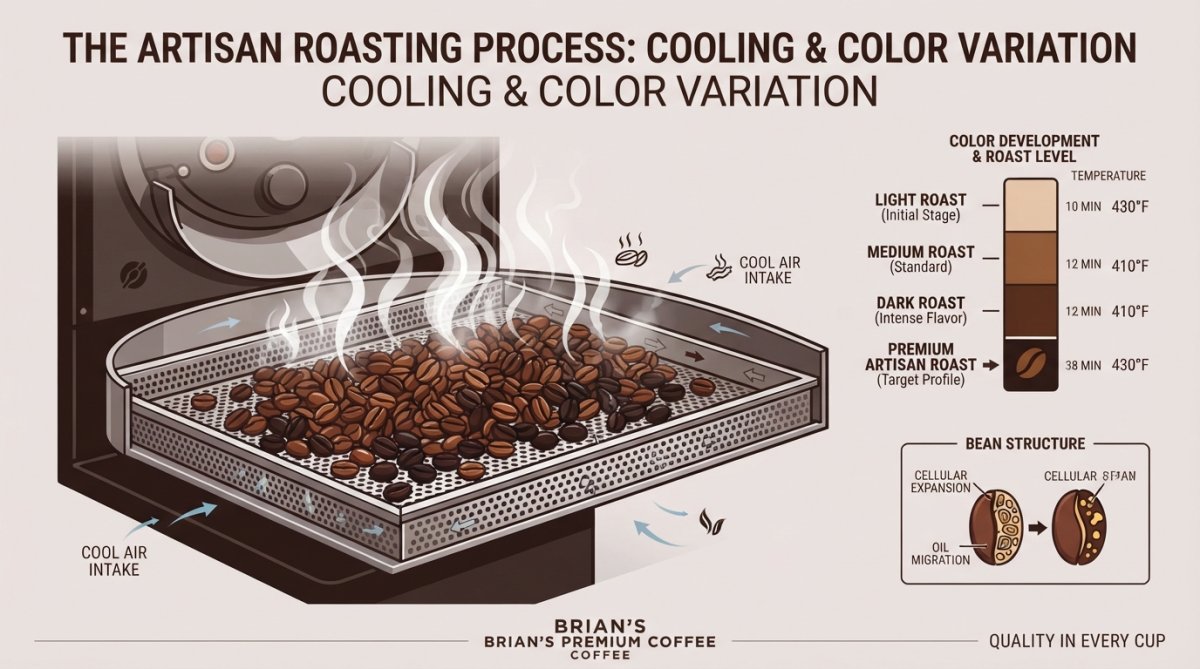
Medium roasts continue past first crack but stop before second crack. They balance origin flavors with roasted flavors, offering fruit and floral notes plus chocolate and caramel.
Dark roasts continue to second crack and beyond. The roasting process dominates the bean's origin flavors. Commercial producers love dark roasts because they mask defects and taste consistent batch to batch.
Artisan roasters choose roast profiles based on what each bean needs to express its best flavor.
Precision Temperature Control During Roasting
Artisan roasters monitor bean temperature, air temperature, and rate of rise throughout the roast, adjusting heat input constantly based on how beans respond. Different beans roast differently. A dense, high-altitude bean roasts slower than a low-altitude bean. An artisan roaster adjusts for these variables; an industrial roaster ignores them.
Temperature precision determines whether you taste the coffee's best flavors or its worst ones. Too fast, and you get grassy, underdeveloped flavors. Too slow, and you get baked, flat flavors. The narrow window where desirable flavors develop requires constant adjustment, something only small-batch roasting allows.
:::pro tip If you're buying artisan coffee, ask the roaster about their roast profile for that specific bean. Good roasters can explain why they chose that profile and what flavors it brings out. :::
Specialty Coffee Flavor Profiles: Understanding Tasting Notes
When you see tasting notes like "blueberry, dark chocolate, and jasmine," those flavors are actually present in the cup if the coffee is roasted correctly and brewed properly.
Acidity vs. Sourness: Why the Distinction Matters
Acidity in specialty coffee is not sourness. Acidity is brightness, the crisp, clean quality that makes your mouth water. High-altitude beans naturally contain more acidity, creating bright fruit and floral notes.
Sourness is a defect that tastes like spoiled milk or vinegar. It comes from under-extraction or old, stale beans where acids have oxidized into unpleasant compounds.
Commercial coffee is roasted dark to hide acidity. Artisan roasters embrace acidity because that's where interesting flavors live. A light roast Ethiopian coffee with bright acidity tastes like berries and flowers.
Mouthfeel, Sweetness, and Aftertaste
Mouthfeel describes how coffee feels in your mouth, thick and syrupy, light and crisp, or somewhere in between. This comes from the coffee's natural oils and how they interact with water during brewing.
Sweetness in coffee is real. It's the natural sweetness that emerges when coffee is roasted properly and brewed correctly. Under-roasted or under-extracted coffee tastes sour and thin. Over-roasted or over-extracted coffee tastes bitter. Properly roasted and extracted coffee tastes sweet, balanced, and complex.
Commercial coffee leaves a harsh, lingering bitterness. Artisan coffee leaves a clean, pleasant finish that makes you want another sip.
Best Brewing Methods for Artisan Coffee at Home
Grind Consistency and Burr Grinder Selection
Grind consistency is essential for artisan coffee. When you grind beans, you create surface area for water to extract flavor compounds. Inconsistent grinds cause uneven extraction: fine particles over-extract (bitter), large particles under-extract (sour).
Blade grinders create inconsistent particle sizes. Burr grinders create uniform particles. For artisan coffee, a burr grinder is essential. Mid-range burr grinders ($40-80) work excellently for home brewing.
Grind size varies by brewing method. French press needs coarse grind. Pour-over needs medium grind. Espresso needs fine grind. Matching grind size to your brewing method ensures proper extraction.
Water Quality, Temperature, and Extraction Variables
Water quality affects taste significantly. If your tap water tastes good, it's fine for coffee. If it tastes bad, filter it.
Ideal brewing temperature is 195-205°F. Below 195°F, extraction is incomplete and coffee tastes sour. Above 205°F, extraction happens too fast and coffee tastes bitter.
Extraction time varies by method. French press needs 4 minutes of contact time. Pour-over needs 2.5-4 minutes. Espresso needs 25-30 seconds. These timing windows allow water to extract the full range of flavors without over-extracting.
| Brewing Method | Water Temperature | Contact Time | Grind Size | Best For |
|---|---|---|---|---|
| French Press | 195-205°F | 4 minutes | Coarse | Full-bodied, oily coffee |
| Pour-Over | 195-205°F | 2.5-4 minutes | Medium | Clean, balanced coffee |
| Espresso | 195-205°F | 25-30 seconds | Fine | Concentrated, intense coffee |
| Cold Brew | Room temperature | 12-24 hours | Coarse | Smooth, low-acid coffee |
| Moka Pot | 195-205°F | 5-10 minutes | Medium-fine | Rich, strong coffee |
The Psychology of the Café Experience and Ritual
Why artisan coffee tastes better isn't purely scientific. Psychology plays a significant role. When you order coffee at a specialty café, you're participating in a ritual. The barista asks about your preferences. The espresso machine hisses. You watch the process and smell the aromas. By the time you taste the coffee, your brain is primed to notice complexity and nuance.
At home, the ritual matters equally. Taking time to grind beans, heat water to the right temperature, and brew carefully signals that this coffee is special. This psychological priming actually changes how you taste the coffee. You notice more flavors and appreciate subtle qualities.
The café environment also matters. Natural light, comfortable seating, and absence of distractions help you taste coffee more clearly. Slowing down and paying attention is part of why artisan coffee tastes better.
Budget-Friendly Hacks to Elevate Your Artisan Coffee at Home
Premium coffee doesn't require premium equipment. Buy whole beans and grind immediately before brewing. A basic burr grinder ($50-80) pays for itself within weeks.
Invest in a simple pour-over dripper ($15-30). Pour-over brewing is forgiving and produces excellent coffee. Use filtered water ($20-30 for a pitcher filter). Buy from local roasters or online specialty roasters that ship quickly. Avoid grocery store coffee, which has sat in warehouses for months.
Buy smaller quantities more frequently. A half-pound of fresh coffee tastes better than a full pound that's been open for three weeks. Learn proper brewing technique through YouTube tutorials. Technique costs nothing but dramatically improves results.
Why Artisan Coffee Tastes Better: Final Thoughts
The reason artisan coffee tastes better comes down to intentionality. Every decision, which beans to source, how hot to roast them, when to ship them, how to package them, is made to preserve flavor rather than maximize profit. Commercial coffee makes the opposite choices.
If you've only experienced commercial coffee, your first cup of artisan coffee will be revelatory. The brightness, complexity, and balance will surprise you. Brian's Premium Coffee brings this philosophy to every bag, carefully sourced premium beans roasted to highlight their unique character, shipped fresh to your door, designed to help you slow down and savor the moment. Start with a single bag and taste the difference that intentionality makes.
Frequently Asked Questions
What is the difference between artisan coffee and regular commercial coffee?
Artisan coffee differs in bean quality, freshness, and roasting method. Artisan roasters source Grade 1 specialty coffee beans from single origins, roast in small batches with precise temperature control, and prioritize volatile oils and flavor compounds that commercial operations sacrifice for shelf stability. Commercial coffee often uses lower-grade beans, longer storage times, and industrial roasting that prioritizes consistency over complexity. The result: artisan coffee tastes better because it retains the origin's unique tasting notes and sensory characteristics.
How does freshness affect why artisan coffee tastes better?
Freshly roasted beans contain volatile oils that give artisan coffee its rich aroma and complex flavor. These oils degrade over time, especially in commercial coffee that may sit in warehouses for weeks or months. Artisan roasters ship beans shortly after roasting, preserving the flavor compounds and mouthfeel. When you brew artisan coffee within 2-4 weeks of roasting, you experience the full sensory analysis the roaster intended, something impossible with older commercial beans that taste flat and one-dimensional.
Can I make artisan-quality coffee at home, or do I need a commercial espresso machine?
You can absolutely make artisan-quality coffee at home with the right tools and technique. A burr grinder for consistent grind size, filtered water at the correct temperature (195-205°F), and proper brewing method matter far more than equipment cost. Focus on freshly roasted beans, precise extraction variables, and barista technique, understanding under-extraction vs. over-extraction makes a huge difference. Home brewing avoids the temperature paradox and 'numbing effect' that sometimes occurs in busy cafés, allowing you to taste the true origin and roast profile.
Why is artisan coffee more expensive than commercial brands?
Artisan coffee costs more because of quality at every stage: sourcing Grade 1 specialty coffee beans commands higher prices than commodity-grade beans; small-batch roasting requires more labor and skill than industrial processing; and rapid shipping preserves volatile oils rather than letting them fade. You're paying for the expertise of specialty roasters, the care in origin selection, and the freshness guarantee. The price difference reflects real quality differences in bean quality, flavor compounds, and the sensory experience, not just branding.
This article was written using GrandRanker