

Smooth Coffee Beans for Home Brewing: 10 Best Picks

Table of Contents
- What Makes Coffee Smooth: The Science Behind Your Perfect Cup
- Low Acid Coffee Beans for Gentle Brewing
- Coffee Brewing Methods for Smooth Taste
- Grind Size for Smooth Coffee: Getting It Right
- Water Temperature for Smooth Coffee Extraction
-
10 Best Smooth Coffee Beans for Home Brewing
- 1. Brian's Premium Coffee: Carefully Sourced Comfort
- 2. Volcanica Coffee Low Acid: Naturally Smooth and Gentle
- 3. Lifeboost Coffee Dark Roast: Dry, Sweet, and Smooth
- 4. Purity Coffee Flow: Organic Medium Roast Balanced Blend
- 5. Puroast Organic House Blend: High Antioxidants, Low Acid
- 6. Tieman's Fusion Coffee: Functional and Smooth
- 7. Lucy Jo's Coffee Mellow Belly: Fair Trade and Gentle
- 8. Golden Ratio Original Gold: Ultra-Low Acid Tea-Like Brew
- 9. Stone Street Coffee Cold Brew Reserve: Designed for Smoothness
- 10. Peet's Major Dickason's Blend: Dark Roast Smoothness
- Freshness and Storage: Keeping Your Smooth Coffee Beans Fresh
- Sustainability and Ethical Sourcing in Premium Coffee
Last Updated: July 25, 2026
Finding the right smooth coffee beans for home brewing transforms your morning ritual. At Brian's Premium Coffee, we understand that smoothness is about the entire experience, from opening the bag to that first satisfying sip. Whether you're managing acid reflux, prefer a gentler cup, or want to elevate your daily coffee, the beans you choose matter enormously.
Most home brewers struggle because "smooth" means different things depending on brewing method, bean origin, roast level, and water quality. This guide explains the science behind smoothness and recommends ten of the best smooth coffee beans available today.
What Makes Coffee Smooth: The Science Behind Your Perfect Cup
Smoothness comes down to three primary factors: acidity level, body, and the absence of bitter compounds.
Acidity refers to chlorogenic acid and other compounds that can irritate sensitive stomachs or create sourness when over-extracted. Lower-acid beans, typically grown at higher altitudes or in regions like Sumatra and Brazil, contain fewer of these compounds. Beans grown in volcanic soil tend to have naturally lower acid profiles.
Body refers to how coffee feels in your mouth, its weight and texture. Full-bodied coffees feel heavier and smoother because they contain more dissolved solids and oils. Dark roasts typically have fuller body than light roasts.
Bitterness emerges when coffee is over-extracted or roasted too dark. The trick is finding beans roasted dark enough for body and smoothness but not so dark that they become acrid.
Roast Level and Smoothness
Medium and dark roasts produce smoother coffee than light roasts because roasting breaks down chlorogenic acids and creates compounds that feel less sharp on your palate. However, pushing too far into very dark roasting creates a burnt, acrid taste that's actually less smooth. The sweet spot for smoothness is typically a medium-dark roast.
Origin and Bean Variety
Where coffee is grown dramatically affects its natural acid content and flavor profile.
Sumatra produces some of the world's smoothest coffee. High humidity and wet-hulled processing create beans with naturally low acidity and earthy, full-bodied flavors.
Brazil is famous for smooth, low-acid beans with sweet, nutty flavors and minimal sharpness.
Colombia produces beans with balanced acidity and good body, delivering smooth cups with chocolate and caramel notes.
Volcanic regions like Guatemala, El Salvador, Kenya, and Ethiopia grow beans in mineral-rich volcanic soil that contributes to smoother profiles.
Arabica beans are inherently smoother than Robusta. A "100% Arabica" label indicates a smoother foundation than blends including Robusta.
Low Acid Coffee Beans for Gentle Brewing
Low-acid coffee beans are specifically selected and sometimes specially processed to minimize stomach irritation while maintaining rich flavor. These beans are essential for anyone with acid reflux, GERD, or sensitive digestion.
Natural low-acid beans come from specific regions and altitudes. Beans grown at lower altitudes in humid climates, particularly in Sumatra and parts of Brazil, naturally develop lower chlorogenic acid content. Some roasters use slow-roasting techniques that further reduce acid compounds.
Most regular coffee has a pH around 4.7. Low-acid specialty coffees are often roasted to achieve a pH of 5.3 or higher, making them significantly gentler on the stomach.
When shopping for low-acid beans, look for labeling that specifically mentions "low acid" or "pH balanced."
Coffee Brewing Methods for Smooth Taste
Your brewing method is just as important as bean selection for achieving smoothness. Different methods extract different compounds, and some naturally produce smoother results.
Cold Brew for Maximum Smoothness
Cold brew is arguably the smoothest brewing method. By steeping coarsely ground coffee in cold water for 12-24 hours, you extract desirable flavors while leaving behind compounds that create sharpness and bitterness. Cold brew concentrate is typically diluted with water or milk before drinking, which further smooths the flavor profile.
For home brewers, a French press or mason jar works perfectly for cold brewing. Add coarse grounds to cold water, let it sit overnight or longer, strain through fine mesh or cheesecloth, and dilute to taste.
French Press and Pour-Over Techniques
A French press creates a full-bodied, smooth cup because the metal mesh filter allows more oils and fine particles to remain in the brew, creating a heavier mouthfeel that many perceive as smoother than paper-filtered coffee.
Pour-over methods (like Chemex or V60) produce cleaner cups because paper filters trap oils and fine particles. However, pour-over can still produce smooth coffee with the right beans and technique. Use slightly cooler water (195-200°F instead of boiling) to extract less bitterness.
Grind Size for Smooth Coffee: Getting It Right
Grind size directly affects extraction speed and, therefore, smoothness. Incorrect grind size is one of the most common reasons home-brewed coffee tastes harsh or bitter.
Coarser grinds extract more slowly, ideal for cold brew and French press. Medium grinds work well for drip machines and pour-overs. Fine grinds are for espresso and Moka pots.
If your coffee tastes bitter, grind coarser. If it tastes weak, grind finer. Invest in a burr grinder (not a blade grinder) that lets you adjust grind size precisely.
Water Temperature for Smooth Coffee Extraction
Water temperature is critically important for smoothness. Too-hot water over-extracts and creates bitterness. Too-cool water under-extracts and creates sourness.
The ideal range for most brewing methods is 195-205°F. For smooth coffee beans, err on the cooler side: 195-200°F. You'll notice less sharpness and more sweetness. If you don't have a thermometer, let boiling water cool for about 30 seconds before pouring.
Water quality also matters. Filtered water produces smoother coffee than tap water with high chlorine or mineral content.
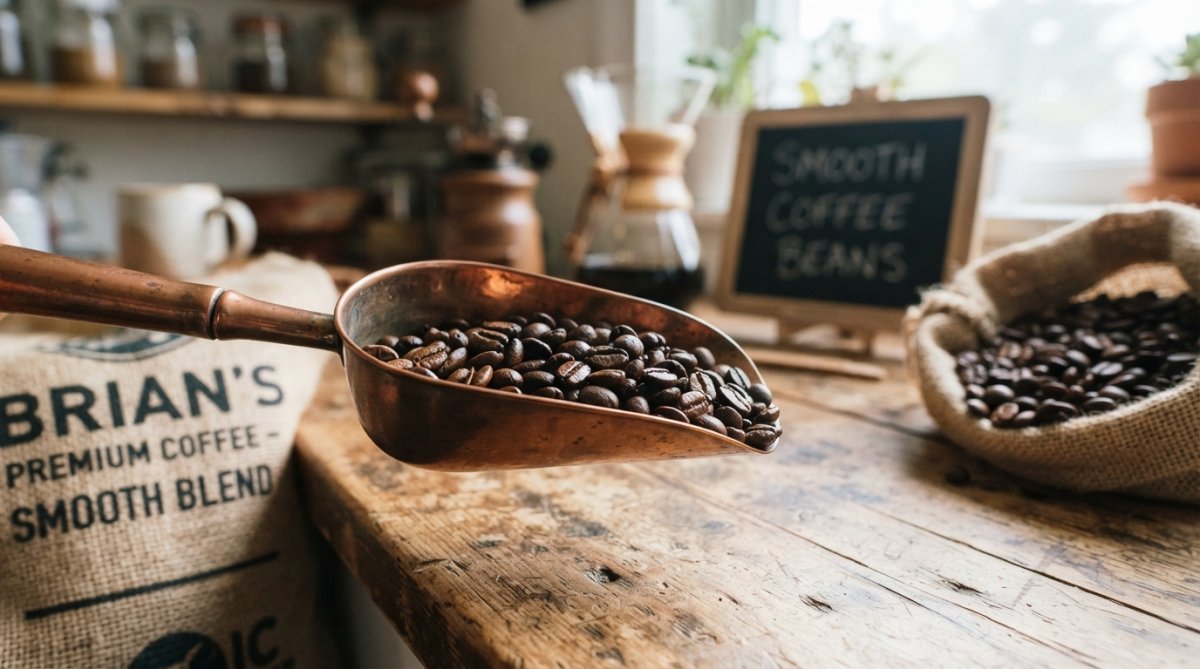
10 Best Smooth Coffee Beans for Home Brewing
| Coffee | Best For | Roast Level | Key Feature |
|---|---|---|---|
| Brian's Premium Coffee | Overall smoothness & comfort | Medium-Dark | Carefully sourced, rich flavor |
| Volcanica Low Acid | Sensitive stomachs | Medium | pH 5.3, volcanic origin |
| Lifeboost Dark Roast | Premium low-acid seekers | Dark | Tested for purity, smooth finish |
| Purity Coffee Flow | Health-conscious brewers | Medium | Organic, antioxidant-optimized |
| Puroast Organic House Blend | Digestive comfort | Medium | 70% less acid, high antioxidants |
| Tieman's Fusion | Functional coffee drinkers | Medium | Matcha & goji infused |
| Lucy Jo's Mellow Belly | Ethical sourcing priority | Medium | Fair Trade, organic, low-acid |
| Golden Ratio Original Gold | Ultra-low acid preference | Gold roast | Tea-like smoothness, 5x less acidic |
| Stone Street Cold Brew Reserve | Cold brew enthusiasts | Dark | Designed specifically for cold brew |
| Peet's Major Dickason's | Dark roast lovers | Dark | Complex, consistently smooth |
1. Brian's Premium Coffee: Carefully Sourced Comfort
Brian's Premium Coffee stands out because it's built on the principle that smoothness comes from thoughtful sourcing. The brand focuses on carefully sourced premium beans that deliver rich, bold flavors without harshness.
What makes Brian's exceptional is the commitment to helping you savor the moment. Beans are selected to highlight sweetness and body rather than complexity that demands attention. This approach is perfect for home brewers who want excellent coffee without becoming coffee experts.
The brand's philosophy translates into beans that consistently deliver smooth, approachable cups across different brewing methods. For pricing and current availability, visit Brian's Premium Coffee's website directly.
2. Volcanica Coffee Low Acid: Naturally Smooth and Gentle
Volcanica Coffee Low Acid takes advantage of volcanic soil terroir to create naturally smooth beans. Grown in volcanic regions and blended from Brazil, Sumatra, and other lower-altitude origins, these beans naturally contain less chlorogenic acid than typical coffees.
The key specification: a pH level of 5.3, significantly higher (less acidic) than the average coffee's 4.7 pH. The medium roast preserves the beans' natural smoothness while developing chocolate, nut, and subtle tangerine notes. Volcanica tests their beans for mold and mycotoxins, adding a layer of quality assurance.
3. Lifeboost Coffee Dark Roast: Dry, Sweet, and Smooth
Lifeboost Coffee specializes entirely in low-acid coffee, meaning their dark roast is specifically formulated for smoothness. The dark roast profile delivers dry, sweet flavors with a smooth finish that appeals to people who love darker coffees but need gentleness.
What sets Lifeboost apart is their testing protocol. Every batch is third-party tested for mycotoxins, heavy metals, and pesticides. The dark roast is available in whole beans, pre-ground, or convenient "Go Bags" for travel.
4. Purity Coffee Flow: Organic Medium Roast Balanced Blend
Purity Coffee Flow optimizes the roasting process itself to maximize antioxidants while minimizing negative compounds. The result is an organic, specialty-grade medium roast that delivers clean energy without jitters or stomach upset.
USDA Certified Organic and regeneratively farmed, Flow beans are roasted with a customized process designed for health benefits. Third-party testing covers mold, mycotoxins, and pesticides. Flow offers whole bean, ground, and single-serve options.
5. Puroast Organic House Blend: High Antioxidants, Low Acid
Puroast achieves low acidity through a unique slow-roasting process that naturally reduces acid while preserving flavor. The Organic House Blend contains 70% less acid than other roasted coffees, a dramatic reduction backed by their testing.
The antioxidant content is equally impressive: seven times more antioxidants than green tea. The medium roast delivers a smooth, balanced flavor with no bitter aftertaste and works across all brewing methods.
6. Tieman's Fusion Coffee: Functional and Smooth
Tieman's infuses coffee with Matcha green tea, Rooibos red tea, and Goji berry, delivering a functional coffee with 5 times the daily antioxidant requirement while maintaining smoothness. The pH level is 5.84 for the medium roast, making it naturally low-acid.
The fusion ingredients are integrated into the roasting and blending process, creating a cohesive flavor profile. The steady, clean energy without spikes appeals to people sensitive to caffeine intensity.
7. Lucy Jo's Coffee Mellow Belly: Fair Trade and Gentle
Lucy Jo's Coffee Roastery prioritizes ethics and smoothness equally. The Mellow Belly blend is Organic and Fair Trade Certified, meaning farmers received fair compensation and worked under ethical conditions.
The beans are specially roasted to reduce acidity while maintaining a rich, full-bodied flavor. Available in whole bean and ground options, Mellow Belly works well across brewing methods.
8. Golden Ratio Original Gold: Ultra-Low Acid Tea-Like Brew
Golden Ratio uses gold roasting at lower temperatures to create coffee that's five times less acidic than black coffee and tastes almost tea-like. The gold roast profile creates a golden-hued bean with a smooth, nutty flavor and no bitterness or burnt taste.
Golden Ratio comes in single-serving pouches that you steep like tea bags, perfect for people with chaotic mornings who don't have time for brewing equipment.
9. Stone Street Coffee Cold Brew Reserve: Designed for Smoothness
Stone Street Coffee Cold Brew Reserve is specifically formulated for cold brewing. The dark roast blend of Colombian Supremo Arabica beans is selected for characteristics that shine in cold brew: chocolate notes, nutty flavors, and natural smoothness.
Stone Street's focus on cold brew specifically matters because not all beans perform equally across all methods. Available in whole bean or pre-coarsely-ground options, Stone Street makes cold brew accessible even without a grinder.
10. Peet's Major Dickason's Blend: Dark Roast Smoothness
Peet's Major Dickason's Blend is a classic for a reason. This dark roast delivers a rich, complex, full-bodied flavor with a smooth finish. The blend includes beans from multiple origins, creating a balanced profile with earth and spice notes.
The consistency is legendary; Peet's has maintained this blend's quality for decades. Available in whole bean, ground, K-Cup pods, and espresso capsules, Major Dickason's is adaptable to almost any brewing method.
Freshness and Storage: Keeping Your Smooth Coffee Beans Fresh
Freshness dramatically affects smoothness. Stale coffee tastes flat, sour, or bitter, never smooth. Coffee begins losing flavor immediately after roasting, with the ideal brewing window being 5-30 days after roasting.
When you receive beans, check the roast date on the bag. Reputable roasters always print this date. If you can't find a roast date, that's a red flag.
Storage conditions matter enormously. Beans should be kept in an airtight container away from light, heat, and moisture. A sealed bag with a one-way valve is ideal. Avoid clear containers, refrigerators, and freezers.
Whole beans stay fresh longer than ground coffee. Grind immediately before brewing. Buy beans in quantities you'll use within 2-3 weeks.
Sustainability and Ethical Sourcing in Premium Coffee
Smooth coffee beans increasingly come with questions about where they're grown and who benefits from your purchase. Ethical sourcing means farmers receive fair prices and operate under humane conditions. Fair Trade certification provides third-party verification.
Sustainability concerns water usage, soil health, and biodiversity. Shade-grown coffee preserves biodiversity and creates more resilient farms. Regenerative farming actively improves soil health and carbon sequestration.
The relationship between ethics and quality is real. Farmers who are fairly compensated invest in their farms, use better practices, and harvest selectively. This care translates into better beans.
When evaluating smooth coffee beans, check for Fair Trade certification, specific farm or region names, organic certification, shade-grown or regenerative farming claims, and roaster transparency about sourcing. Several coffees in this guide (Lucy Jo's, Purity Coffee, Puroast) explicitly highlight ethical sourcing.
Finding smooth coffee beans for home brewing is about understanding what smoothness means and matching that to your brewing method and taste preferences. The ten options here represent different approaches, from ultra-low-acid beans for sensitive stomachs to dark roasts for people who want body and richness. Brian's Premium Coffee brings together the core principle that smoothness comes from careful sourcing and thoughtful roasting, delivering beans designed to bring comfort and warmth to your daily ritual. Start with a bag that matches your brewing method and taste preference, pay attention to freshness and storage, and you'll discover that smooth coffee is the standard you should expect.
Frequently Asked Questions
What kind of coffee beans are naturally smooth?
Smooth coffee beans typically come from lower-altitude regions like Brazil and Sumatra, which naturally produce lower-acid beans with mellow flavor profiles. Medium roasts and specialty arabica varieties are also known for smoothness. Beans with tasting notes of chocolate, nuts, and caramel tend to be smoother than those with bright, citrus-forward notes. Look for single-origin or blended smooth coffee beans specifically roasted to minimize bitterness.
How does grind size affect smooth coffee taste?
Grind size directly impacts extraction and smoothness. Too-fine grounds over-extract, creating bitter, harsh flavors. Too-coarse grounds under-extract, resulting in weak, thin coffee. For smooth coffee beans, use medium-fine grinds for drip and pour-over, medium for French press, and coarse for cold brew. Matching your grind size to your brewing method ensures proper extraction and delivers the smooth, balanced flavor profile your beans were designed to provide.
What water temperature produces the smoothest coffee?
Water temperature between 195-205°F produces the smoothest extraction for most smooth coffee beans. Water hotter than 205°F over-extracts and creates bitter, harsh notes. Cooler water under-extracts, leaving coffee thin and sour. For cold brew, room-temperature water naturally prevents over-extraction, making it ideal for maximum smoothness. Measure water temperature with a thermometer or let boiling water cool 30 seconds before brewing to hit the ideal range.
Are low acid coffee beans always smoother than regular coffee?
Low acid coffee beans are typically smoother and gentler on the stomach, but smoothness depends on multiple factors: roast level, origin, and brewing method matter equally. A low-acid bean roasted too dark can still taste harsh. Conversely, a naturally low-acid bean roasted to medium-light with proper brewing technique will deliver exceptional smoothness. Look for beans specifically labeled as low-acid with positive tasting notes, and pair them with appropriate brewing methods for the smoothest results.
How can I ensure my smooth coffee beans stay fresh during shipping?
Freshly roasted beans lose flavor within 2-4 weeks after roasting. When ordering smooth coffee beans online, check the roast date on the bag, it should be within 1-2 weeks of arrival. Many premium roasters use one-way valve bags that protect beans from oxygen while allowing CO2 to escape. Store beans in an airtight container away from light, heat, and moisture. Grind just before brewing to preserve the smooth, nuanced flavors and aromatic compounds that make premium beans worth the investment.
This article was written using GrandRanker